TL;DR
What causes anxiety attacks is usually a mix of body stress response, daily habits, and sometimes substances, not one single event.
Alcohol, caffeine, stimulants, cannabis, and withdrawal can all set off anxiety attacks, often hours after the substance is used.
Many triggers are quiet ones: poor sleep, skipped meals, hidden stress, and medication changes.
If attacks keep coming back, or you are drinking or using to cope, treating both problems together works better than treating one.
Table of Contents
Introduction
Your heart is pounding, your chest feels tight, and you cannot tell why. Nothing dramatic happened. You were standing in a grocery line, or lying in bed. If you have been through this, you have probably asked what causes anxiety attacks, and you may have been told "stress" without much else.
The honest answer is more specific than that. Some triggers are obvious. Many are not, and a few come from things people use to feel better, like a nightly drink or a third cup of coffee. This article covers nine triggers that often get missed, how substances and withdrawal fit in, and when it is time to call someone. If you are reading this for a family member, you will find plain explanations you can use.
Some of what follows may sound familiar. None of it means something is wrong with your character.
Anxiety attacks vs. panic attacks: what's the difference?
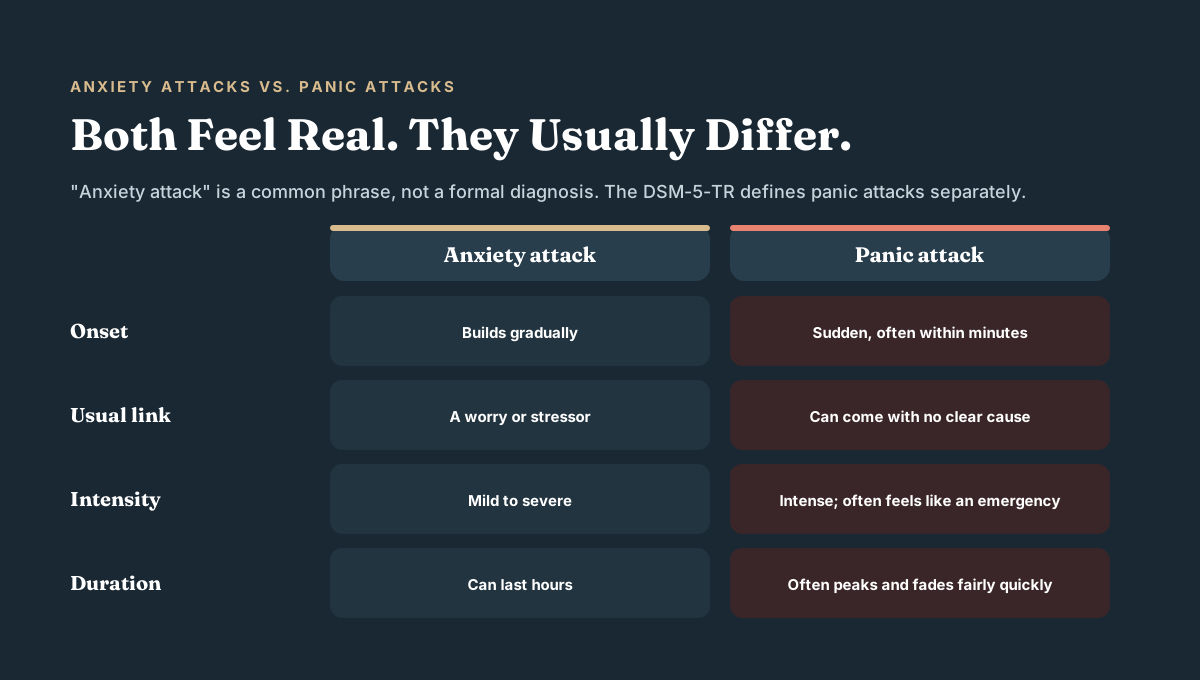
"Anxiety attack" is a common phrase, but it is not a formal diagnosis. The manual clinicians use to define and classify mental disorders, the DSM-5-TR, describes panic attacks and anxiety disorders as separate things.[1] In everyday speech, people use "anxiety attack" for a wave of intense worry and physical symptoms that builds over time, often around a known stressor.
A panic attack tends to arrive fast, peak within minutes, and can come with no clear reason. Either way, it feels real and frightening. Here is how they usually differ.
Feature | Anxiety attack (common term) | Panic attack |
|---|---|---|
Onset | Builds gradually | Sudden, often within minutes |
Usual link | A worry or stressor | Can come with no clear cause |
Intensity | Mild to severe | Intense, often feels like an emergency |
Duration | Can last hours | Often peaks and fades within a short time |
If you want to know whether your worry has crossed into a longer pattern, our post on warning signs of generalized anxiety disorder covers that.
What causes anxiety attacks? Understanding the basics
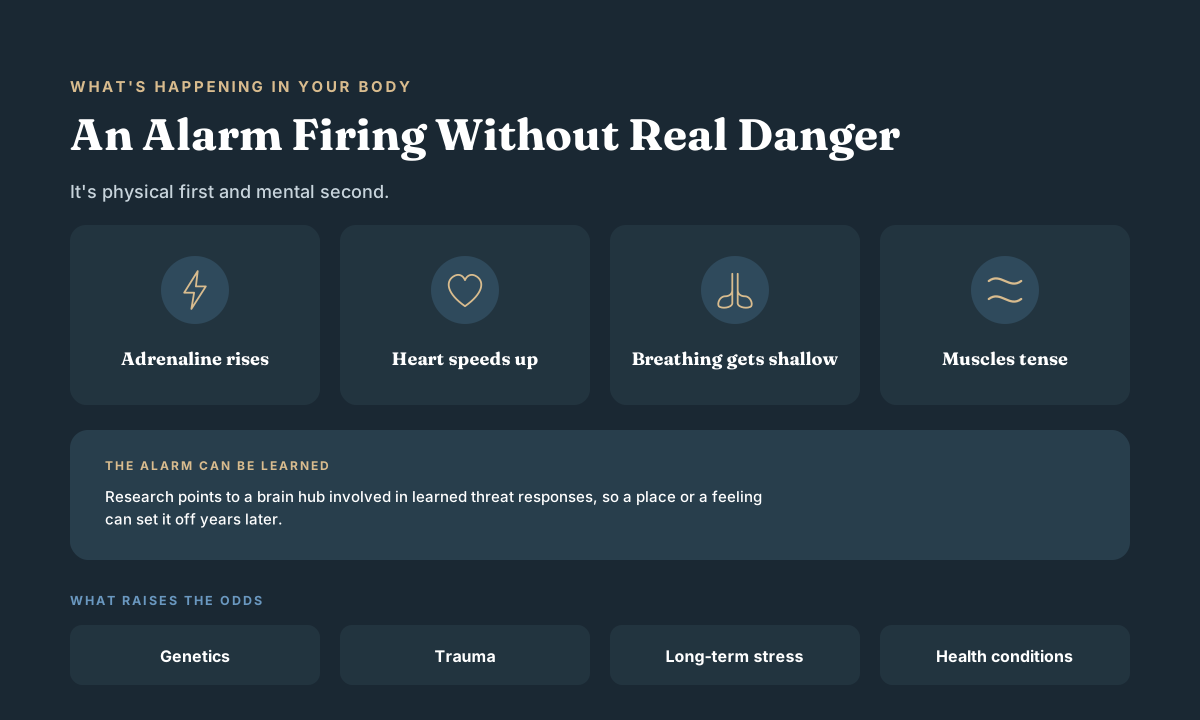
An anxiety attack is your body's alarm system firing when there is no real danger, or far more alarm than the moment calls for. Adrenaline rises. Your heart speeds up, your breathing gets shallow, and your muscles tense. The experience is physical first and mental second.
NIAAA has described research identifying a brain hub with a key role in learned responses to direct and indirect threats.[2] That fits what many people notice: past experience can teach the alarm, so a place or a feeling can set it off years later. Genetics, trauma, long-term stress, and health conditions all raise the odds. Finding what causes anxiety attacks in your own life usually means looking at several small things stacking up, not one big one.
9 common triggers you might be missing
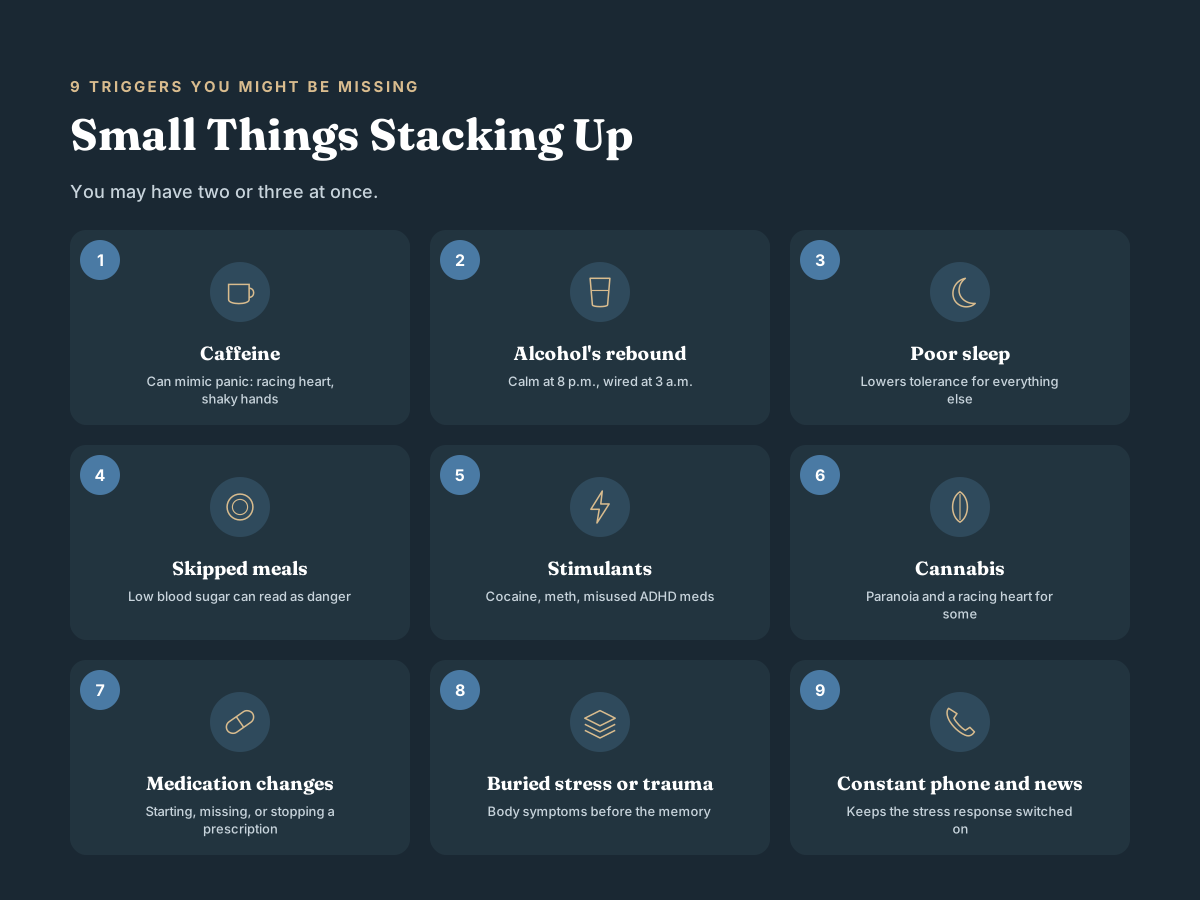
People overlook these most often. You may have two or three at once.
Caffeine. Coffee, energy drinks, and pre-workout powders can mimic panic: racing heart, shaky hands, a jittery gut.
Alcohol's "rebound." A drink may calm you at 8 p.m. and leave you wired and dreading things at 3 a.m.
Poor sleep. A few short nights lower your tolerance for everything else.
Skipped meals. Low blood sugar causes shakiness and a pounding pulse that your brain may read as danger.
Stimulants. Cocaine, methamphetamine, and misused ADHD medication can trigger intense attacks.
Cannabis. For some people, especially with high-potency products, it brings paranoia and a racing heart instead of calm.
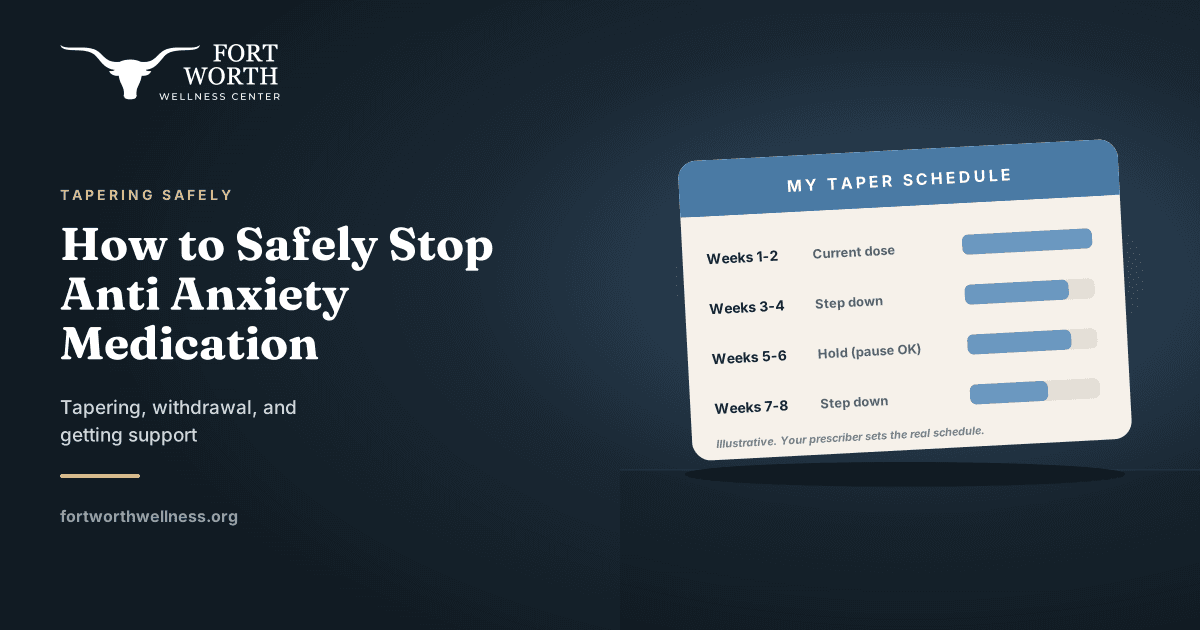
Medication changes. Starting, missing, or stopping a prescription can shift how you feel within days. See our guide on stopping anti-anxiety medication safely.
Buried stress or trauma. Old events can surface as body symptoms before you connect them to a memory.
Constant phone and news use. A steady drip of alarming information keeps your stress response switched on.
How alcohol, drugs, and withdrawal can trigger anxiety attacks
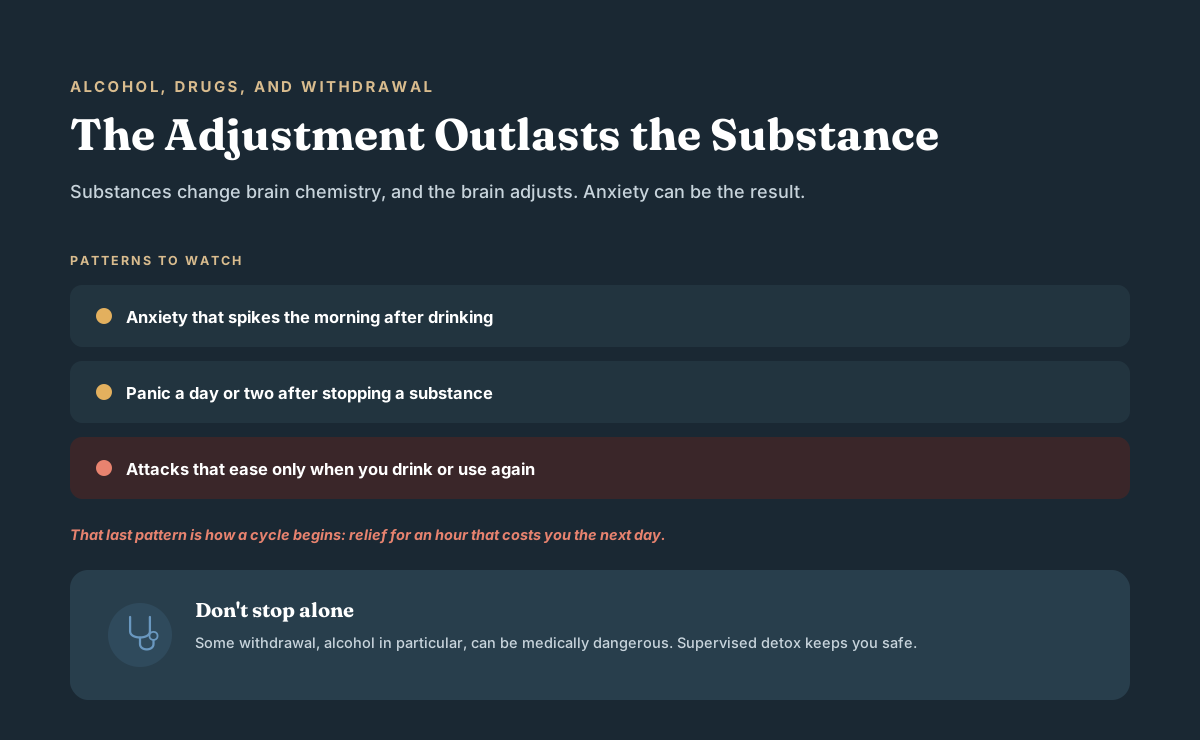
Substances change brain chemistry, and the brain adjusts. When the substance wears off, the adjustment is still there, and anxiety is the result. NIAAA publishes information on alcohol's effects on the body and on alcohol use disorder, and anxiety is one of the ways those effects show up.[2] NIDA also lists the health effects and risks of many drugs on its drug pages.[3]
Withdrawal deserves its own mention. When someone who drinks heavily or uses certain drugs regularly stops or cuts back, anxiety and panic-like symptoms can be part of it. Some forms of withdrawal, alcohol in particular, can be medically dangerous. That is why we do not advise stopping alone. A supervised medical detox lets a team manage symptoms and keep you safe.
Anxiety that spikes the morning after drinking.
Panic that arrives a day or two after stopping a substance.
Attacks that ease only when you drink or use again.
Take that last pattern seriously. Relief that works for an hour and costs you the next day is how a cycle begins.
When anxiety and substance use occur together
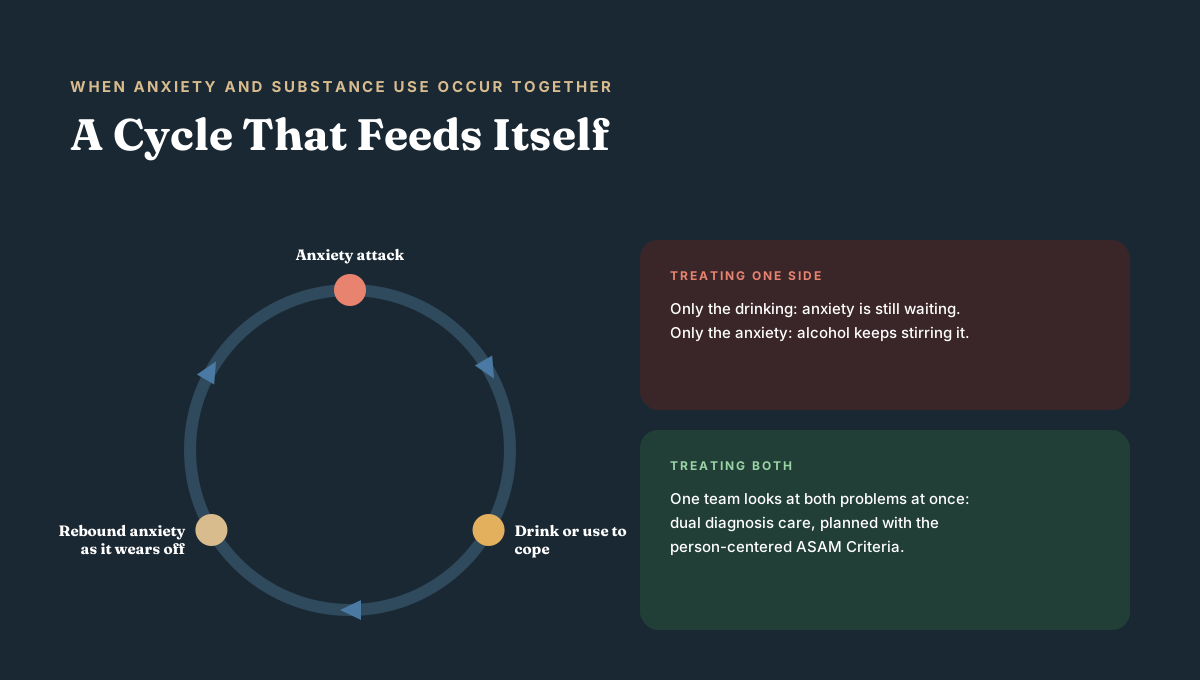
Anxiety and substance use often go together. People drink or use to quiet the attacks, and the substance then makes the attacks more likely. Clinicians call this a co-occurring condition. The American Society of Addiction Medicine describes its ASAM Criteria as guidelines that use a person-centered approach to treatment plans for addiction and co-occurring conditions.[4]
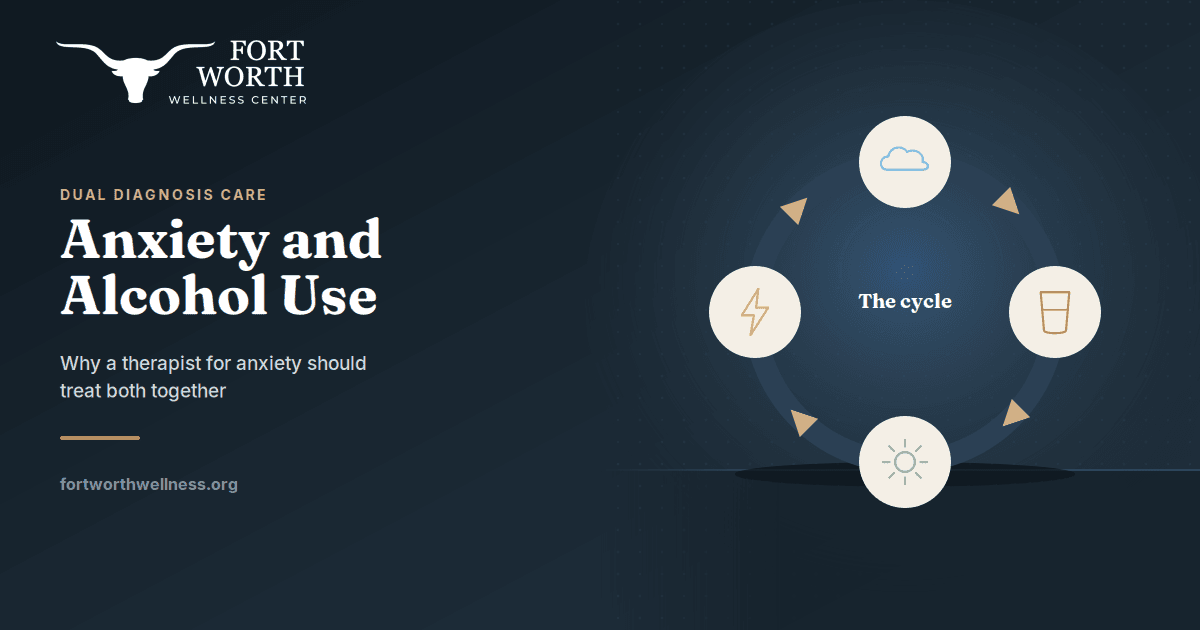
In practice, that means one team looks at both problems at once. Treating only the drinking leaves the anxiety waiting. Treating only the anxiety, while alcohol keeps stirring it up, rarely holds. Our dual diagnosis program is built for this, and our post on treating anxiety and alcohol use together explains how that works day to day.
Healthy ways to manage and reduce triggers
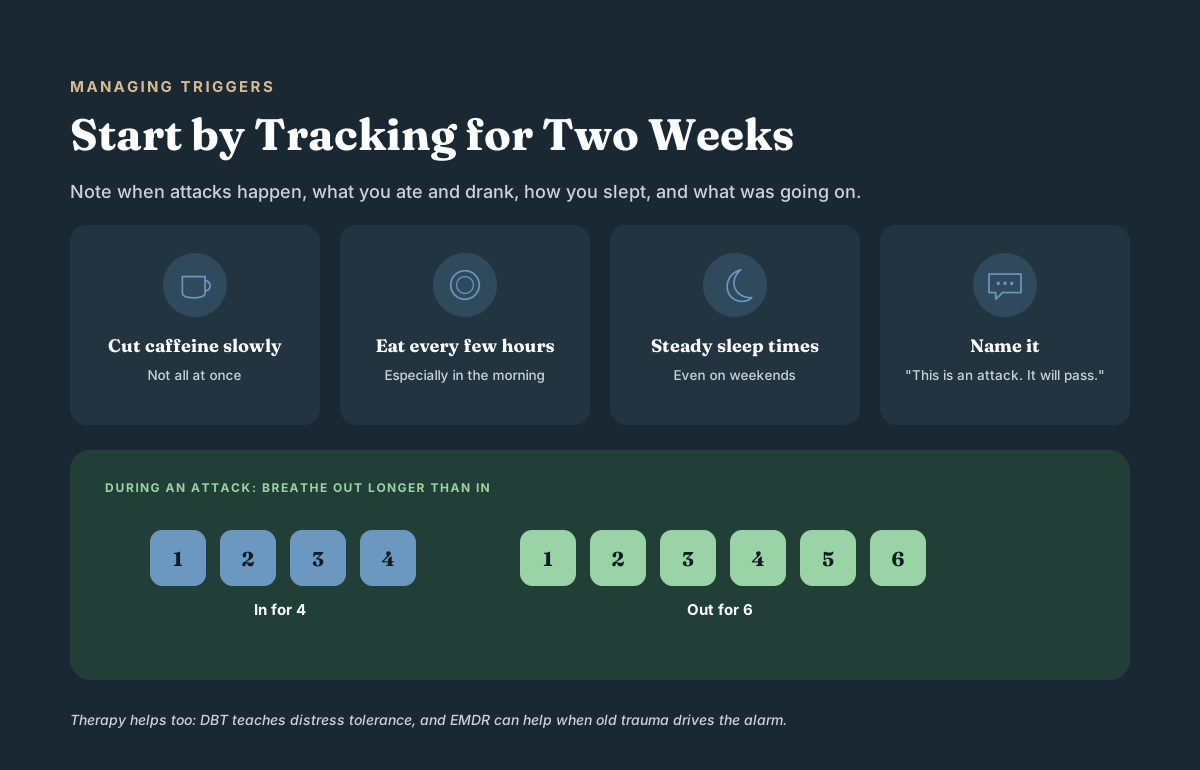
Start by tracking. For two weeks, write down when attacks happen, what you ate and drank, how you slept, and what was going on. Patterns show up faster than most people expect.
Cut caffeine back slowly, not all at once, so you do not add headaches and jitters.
Eat something every few hours, especially in the morning.
Keep a steady sleep and wake time, even on weekends.
During an attack, breathe out longer than you breathe in. Try four counts in, six counts out.
Name what is happening: "This is an attack. It will pass."
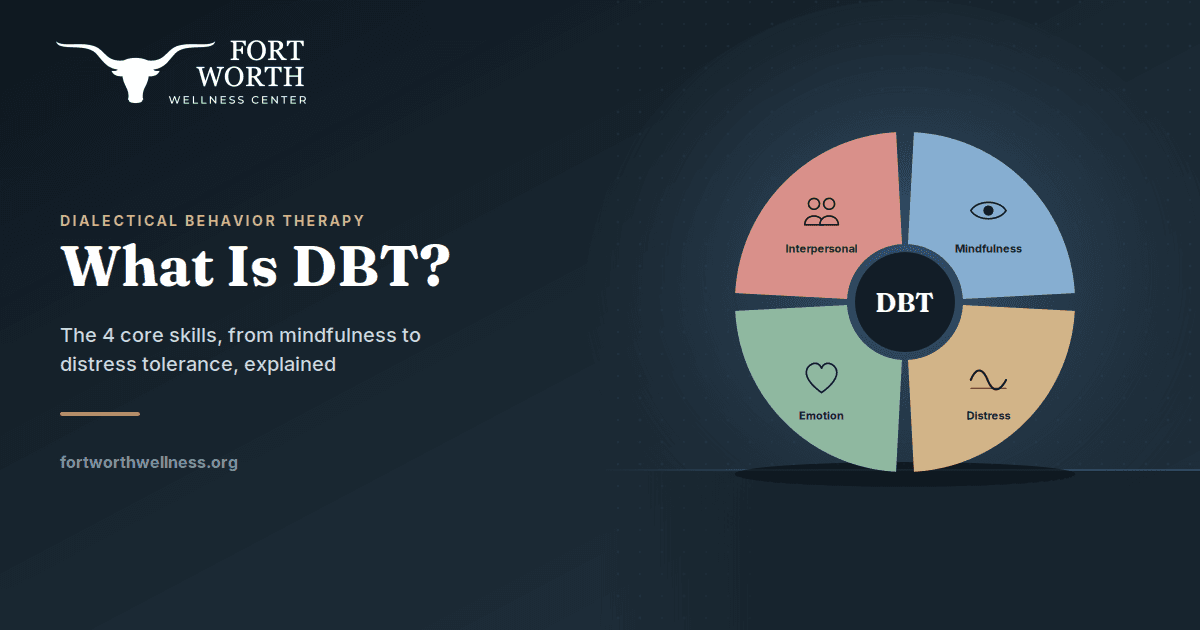
Skills-based therapy helps too. Dialectical behavior therapy teaches distress tolerance, and EMDR can help when old trauma is behind the alarm. If you take medication for anxiety while in recovery, this guide on talking to your doctor can help you prepare.
When to seek professional help at Fort Worth Wellness
Reach out if attacks are happening more than once or twice a month, if you avoid places out of fear of one, or if you are using alcohol or drugs to get through them. Reach out sooner if you are afraid to stop using on your own. If you are thinking about harming yourself, call or text 988, the Suicide & Crisis Lifeline, listed on the SAMHSA site.[5]
At Fort Worth Wellness, we start with a conversation and an assessment. Depending on what we find, that may mean detox, mental health residential care, or a plan that continues after discharge through aftercare and alumni support. If you are not sure what the first month looks like, read what to expect in your first 30 days. You can also search for other options through the SAMHSA treatment locator or by calling 1-800-662-HELP (4357).[3]
Frequently Asked Questions
Q: What causes anxiety attacks to come on suddenly with no obvious reason?
A: Usually the trigger is there but hidden. Poor sleep, caffeine, low blood sugar, last night's alcohol, or a learned fear response can all fire the alarm without any thought attached. A symptom diary often reveals the pattern within a couple of weeks.
Q: Can alcohol, caffeine, or drug use cause anxiety attacks?
A: Yes. Alcohol can bring rebound anxiety as it wears off, caffeine and stimulants speed up the heart, and cannabis causes panic in some people. NIAAA and NIDA both publish information on the health effects of these substances.[2][3]
Q: How do I know if I'm having an anxiety attack or a heart attack?
A: You cannot always tell from the inside, because chest pain, a racing pulse, and shortness of breath appear in both. If pain spreads to your arm, jaw, or back, or you feel faint or sweaty, call 911. If it is your first episode, get checked. Never guess.
Q: Can withdrawal from alcohol or drugs trigger an anxiety attack?
A: Yes. Anxiety and panic-like symptoms are common in withdrawal. Some withdrawal, especially from alcohol, can be dangerous, so talk to a medical provider before you stop.
Q: When should I seek professional help for anxiety attacks and substance use?
A: Get help if attacks keep returning, if they limit where you go or what you do, or if you rely on a substance to cope. Do not wait for things to get worse. An assessment is a conversation, not a commitment.
Conclusion
What causes anxiety attacks is rarely one thing. It is often a body on high alert, made worse by sleep loss, stimulants, alcohol, or withdrawal. Once you can name your triggers, you can start to change them. If substances are part of your story, you deserve a team that treats both sides together. Contact Fort Worth Wellness at fortworthwellness.org to talk through where you are and what the next step could be.
References
American Psychiatric Association. (n.d.). Diagnostic and Statistical Manual of Mental Disorders (DSM-5-TR). - https://www.psychiatry.org/psychiatrists/practice/dsm
National Institute on Alcohol Abuse and Alcoholism. (n.d.). NIAAA home page. - https://www.niaaa.nih.gov
National Institute on Drug Abuse. (n.d.). NIDA.NIH.GOV. - https://nida.nih.gov
American Society of Addiction Medicine. (n.d.). ASAM - American Society of Addiction Medicine. - https://www.asam.org
Substance Abuse and Mental Health Services Administration. (n.d.). Home | SAMHSA. - https://www.samhsa.gov