TL;DR
Anxiety and alcohol use often make each other worse. Drinking can calm you tonight and raise your anxiety tomorrow.
Treating only one problem leaves the other free to pull you back. A therapist for anxiety who also understands addiction treats both at once.
CBT, DBT, and motivational interviewing are the main therapies used. A physician should handle medical detox and medication decisions.
You do not need to be sober on your own before you ask for help. If drinking is heavy, stopping suddenly can be dangerous without medical care.
Fort Worth Wellness offers dual diagnosis care, medical detox, residential mental health treatment, and aftercare.
Table of Contents
What a therapist for anxiety does in co-occurring disorder treatment
Evidence-based therapies for anxiety and alcohol use (CBT, DBT, MI)
Introduction
You have a drink to take the edge off. It works for an hour or two. Then you wake at 3 a.m. with your heart pounding, and the worry is worse than it was before you drank.
If that sounds familiar, you may be wondering who to call: a therapist for anxiety, or an addiction program? You need someone who can look at both. This article explains why the two problems are so often tied together, what a therapist for anxiety does when alcohol is part of the picture, and how to tell when it is time for more structured care.
If you are in crisis right now, call or text 988, the Suicide & Crisis Lifeline, or call the SAMHSA National Helpline.[1]
How anxiety and alcohol use feed each other
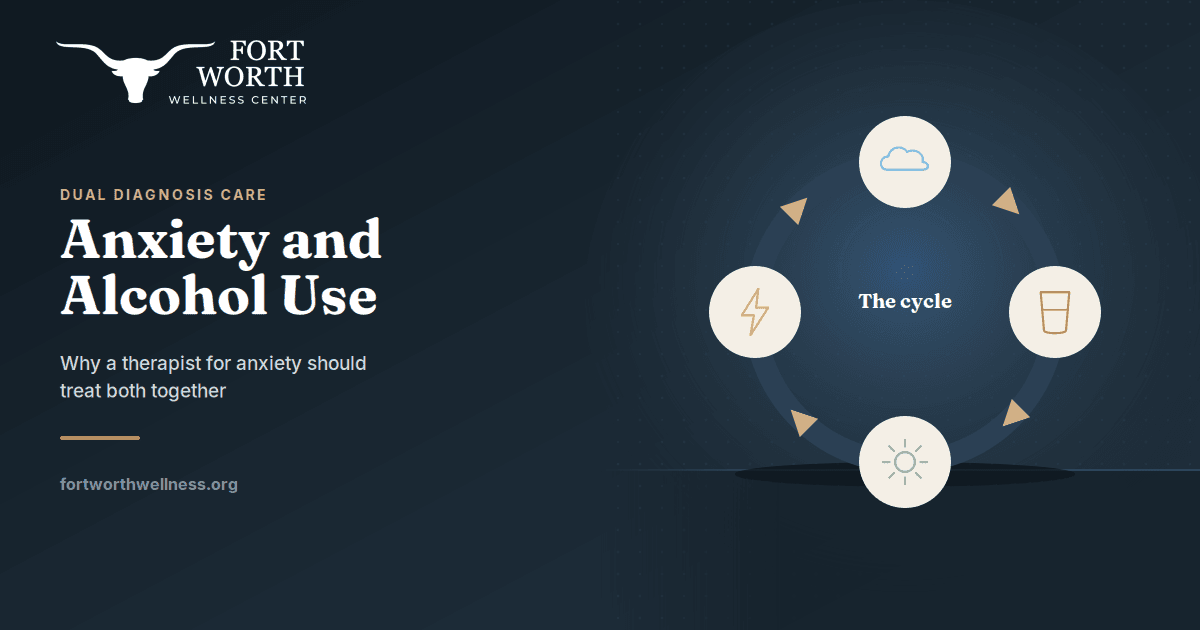
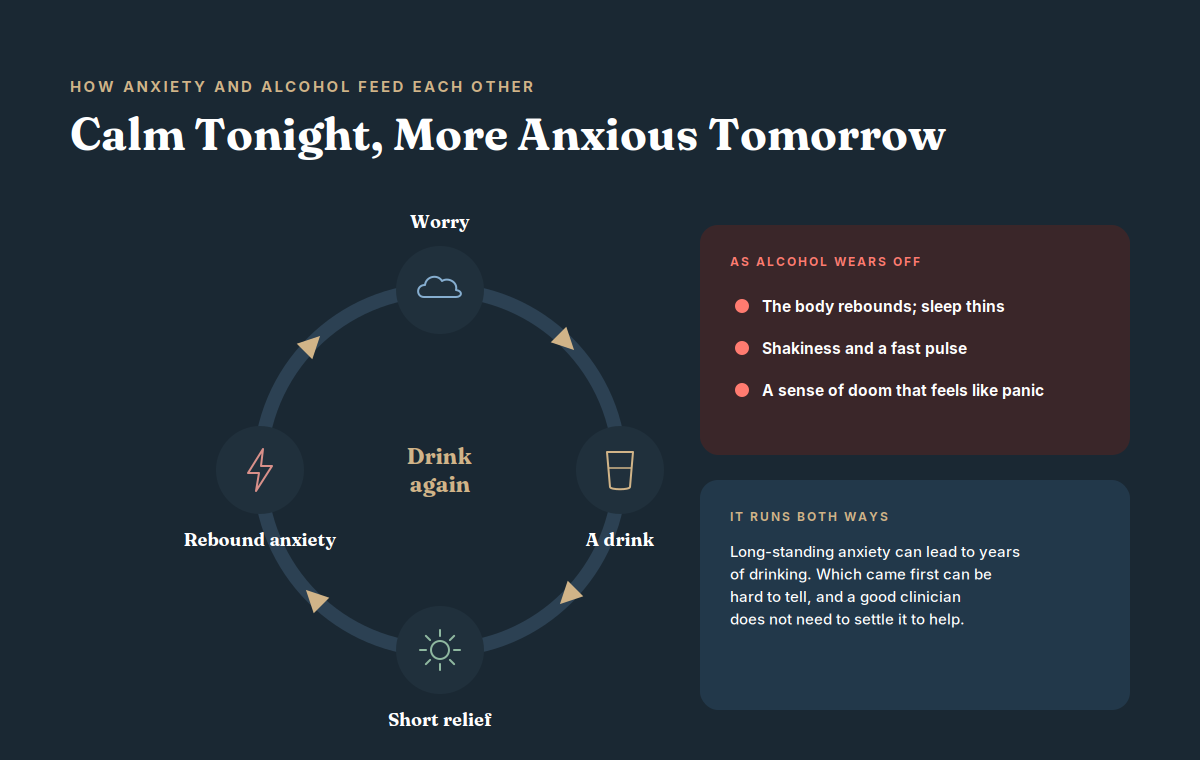
Alcohol slows the brain down. In the short term, that can feel like relief from racing thoughts, tight shoulders, or dread in social settings. That relief is why so many people start using it as a tool.
The problem is what happens as the alcohol wears off. The body rebounds, and sleep gets thinner. Shakiness, a fast pulse, and a sense of doom can show up the next morning, and they feel a lot like an anxiety attack. So you drink again to quiet them. NIAAA, the federal institute that studies alcohol and health, publishes extensive material on alcohol's effects on the body and on alcohol use disorder.[2]
It runs the other way too. Someone with long-standing anxiety may drink for years before anyone calls it a drinking problem. By then, it can be hard to tell which came first. A good clinician does not need to settle that question to start helping.
Why treating only one condition often leads to relapse
Imagine you stop drinking but nobody treats the anxiety. The panic, the sleeplessness, and the dread are all still there, and now you have no way of coping with them. Going back to alcohol can feel like the only thing that has ever worked.
Now imagine the reverse. You see a therapist for anxiety, but the drinking goes unmentioned. Alcohol keeps disrupting your sleep and mood, so the skills you learn in session have a hard time taking hold.
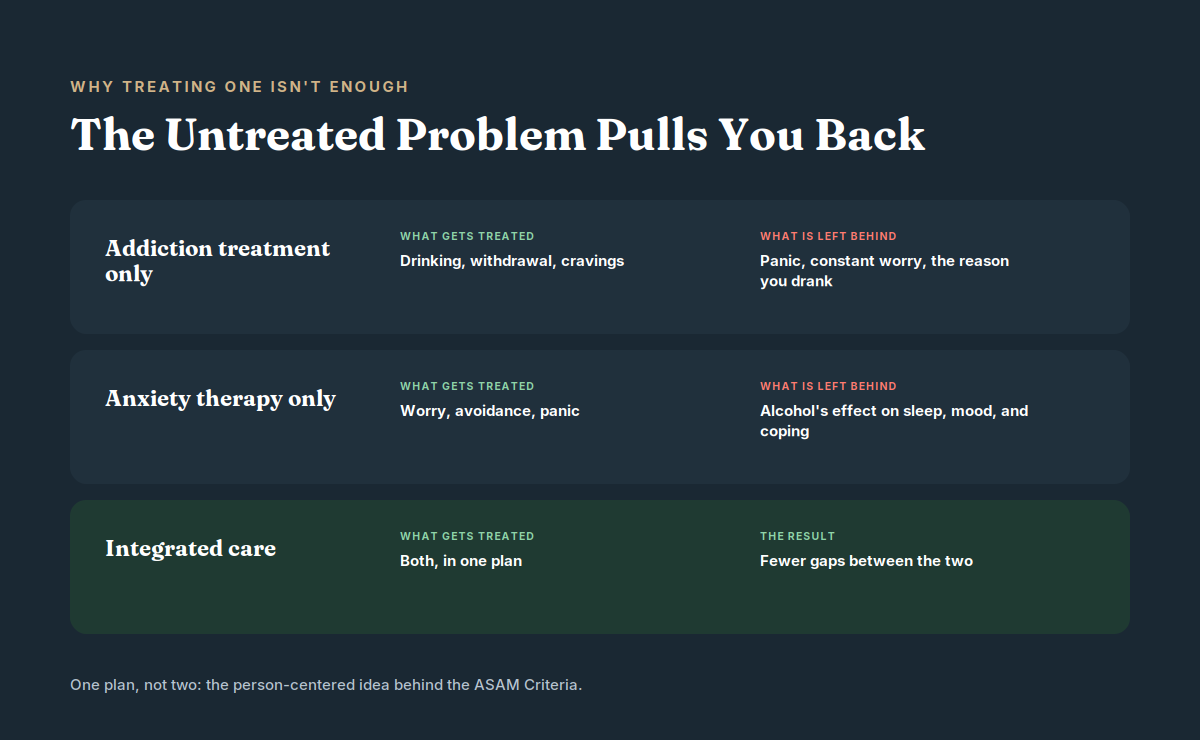
Approach | What gets treated | What is often left behind |
|---|---|---|
Addiction treatment only | Drinking, withdrawal, cravings | Panic, constant worry, the reason you drank |
Anxiety therapy only | Worry, avoidance, panic | Alcohol's effect on sleep, mood, and coping |
Integrated care | Both, in one plan | Fewer gaps between the two |
The American Society of Addiction Medicine builds its treatment guidelines, The ASAM Criteria, around a person-centered approach to addiction and co-occurring conditions.[3] That is the idea behind integrated care: one plan, not two separate ones.
What a therapist for anxiety does in co-occurring disorder treatment
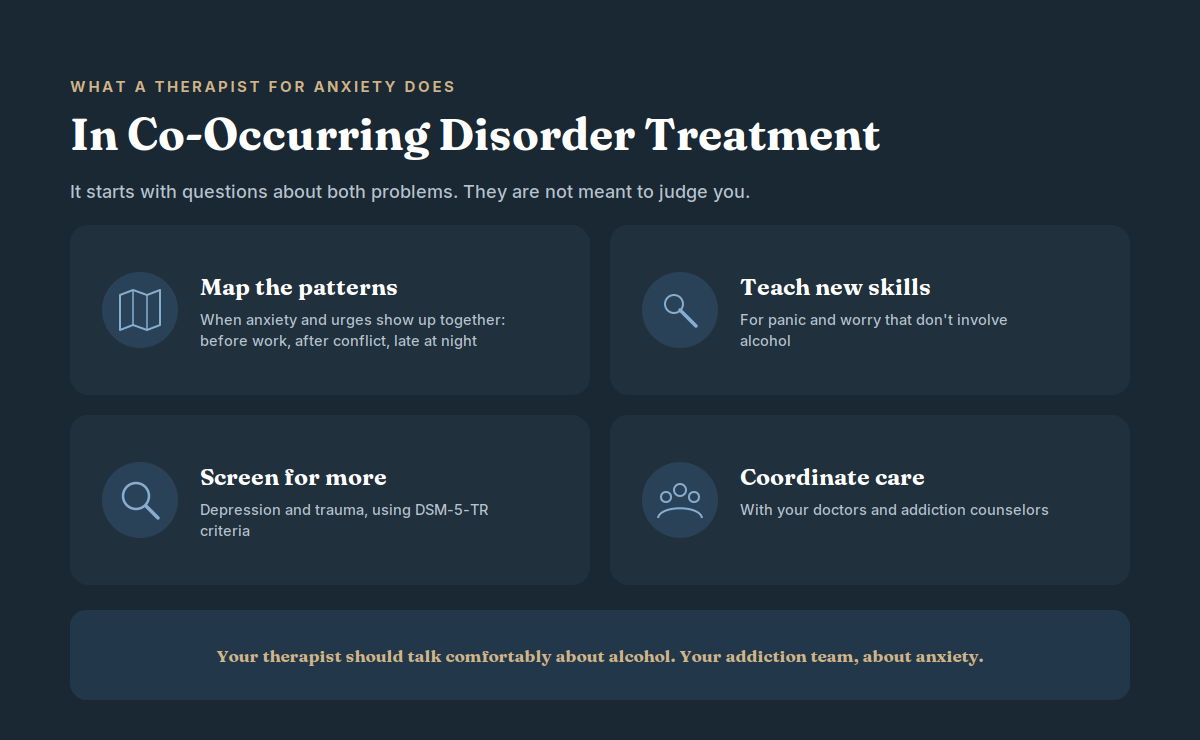
A therapist for anxiety in a dual diagnosis setting starts by asking about both problems. How much do you drink, and when? What does the anxiety feel like, and what are you doing to get through it? These questions are not meant to judge you.
From there, the work usually includes:
Mapping when anxiety and urges to drink show up together, such as before work, after conflict, or late at night.
Teaching skills for panic and worry that do not involve alcohol.
Screening for other conditions, including depression and trauma. Clinicians use the DSM-5-TR, the standard classification of mental disorders in the United States, to define and diagnose these conditions.[4]
Coordinating with the doctors and addiction counselors on your team.
If you are still deciding who to see, our guide on how to choose the right mental health professional for anxiety covers credentials and cost. Here, the point is narrower: your therapist for anxiety should be comfortable talking about alcohol, and your addiction team should be comfortable talking about anxiety.
Evidence-based therapies for anxiety and alcohol use (CBT, DBT, MI)
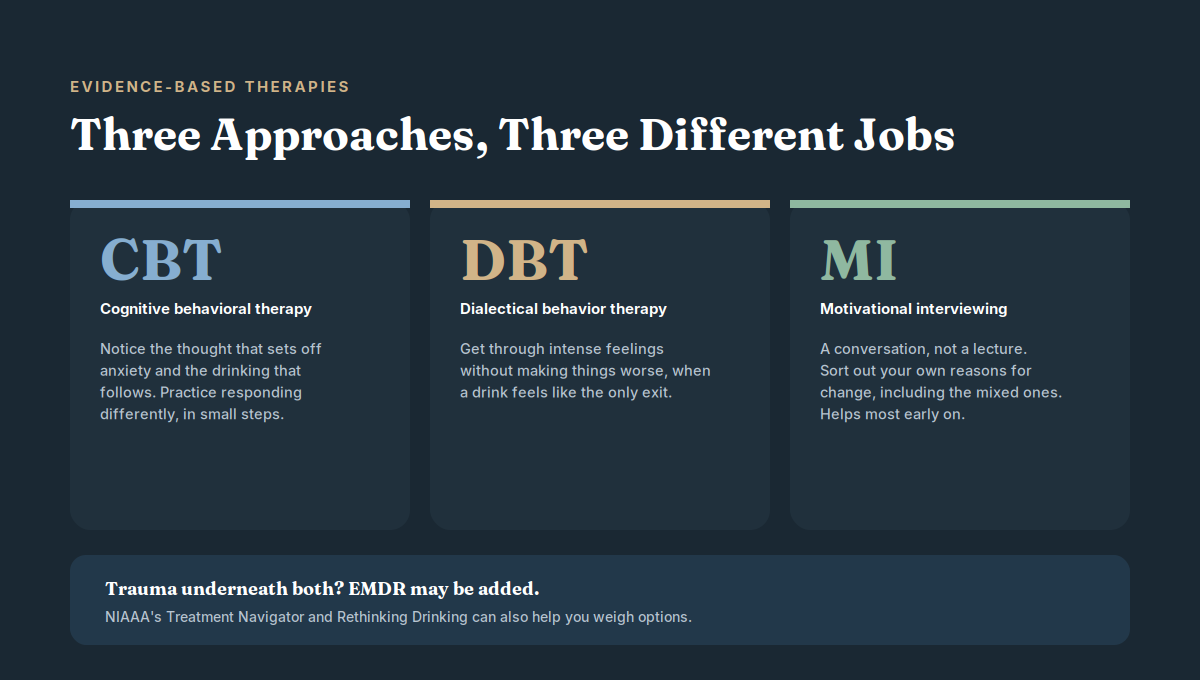
Three approaches come up most often in dual diagnosis care. Each does a different job.
Cognitive behavioral therapy (CBT)
CBT helps you notice the thought that sets off anxiety and the drinking that follows it. You practice responding differently, in small steps. For a general overview of how CBT and related methods work, see Anxiety Therapy: What Works and How to Start.
Dialectical behavior therapy (DBT)
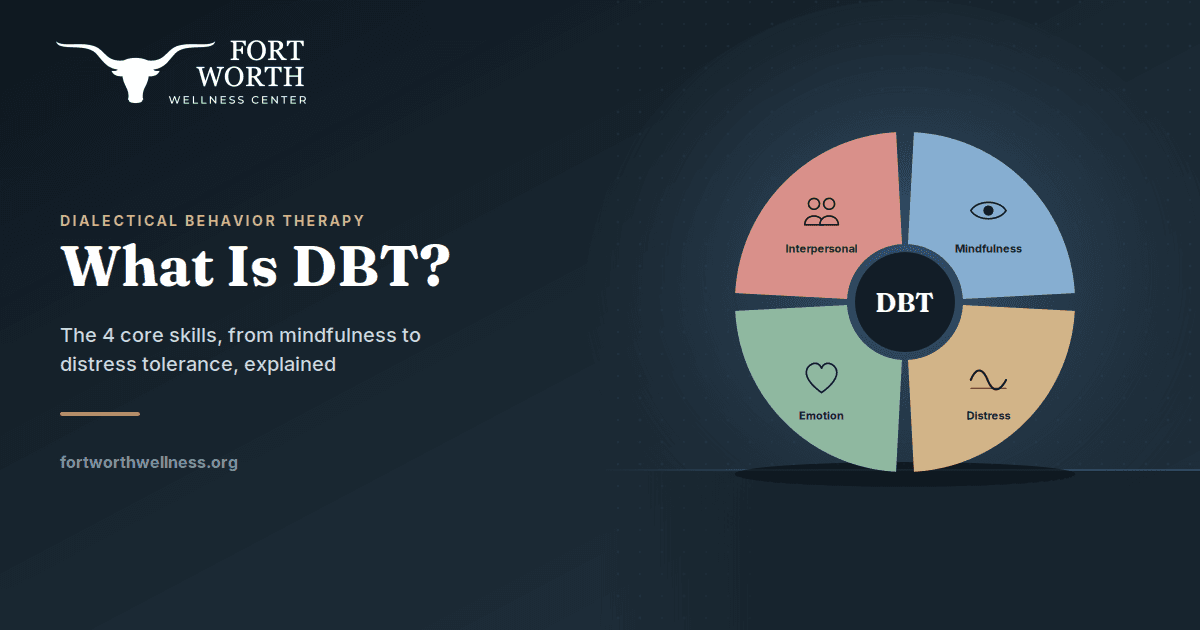
DBT focuses on getting through intense feelings without making things worse. It helps when anxiety spikes fast and a drink feels like the only exit. We explain the skills in our DBT article.
Motivational interviewing (MI)
MI is a conversation style, not a lecture. The therapist helps you sort out your own reasons for change, including the ambivalent ones. It tends to help most early on, when you are not sure you want to cut back or quit. NIAAA also offers a Treatment Navigator and the Rethinking Drinking resource for people weighing their options.[2]
Where trauma sits underneath both problems, EMDR may be added. See what EMDR therapy involves.
Medical support: safe detox and medication considerations
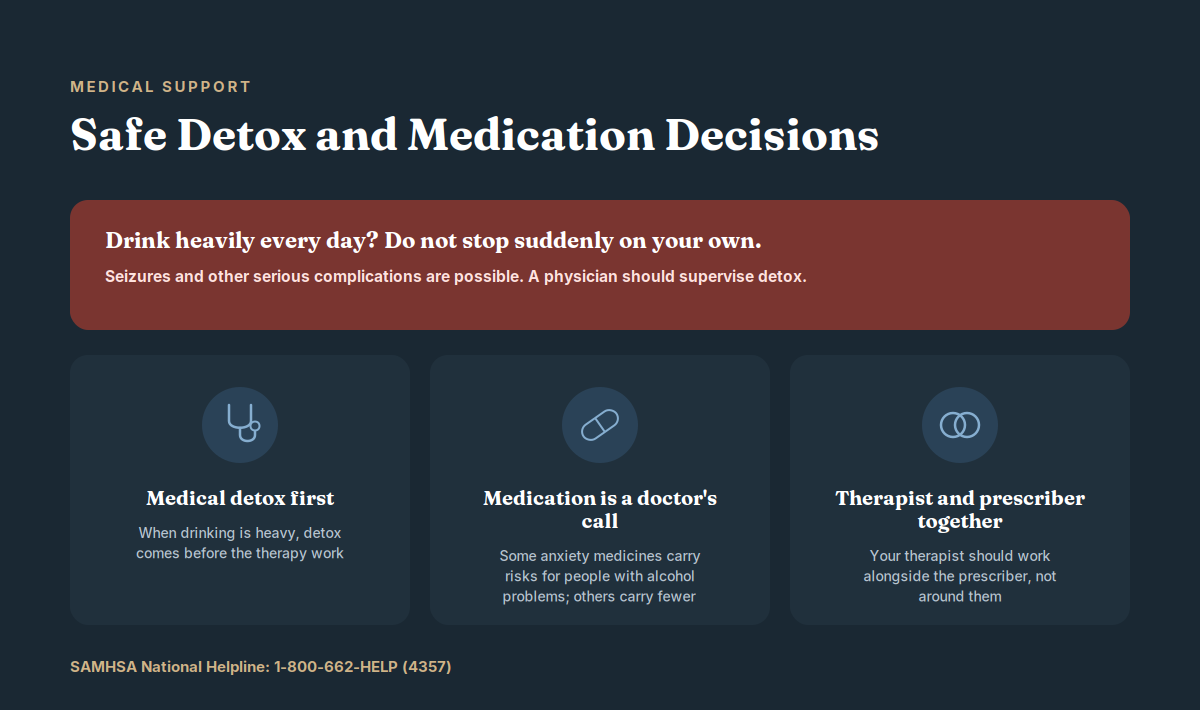
This part matters for your safety. Alcohol withdrawal can be dangerous. If you drink heavily every day, do not stop suddenly on your own. Seizures and other serious complications are possible, and a physician should supervise. Our medical detox program is built for exactly this.
Medication is a separate question, and it is one for your doctor. Some anxiety medicines carry risks for people with alcohol problems, and others carry fewer. We cover that conversation in how to talk to your doctor about medicine for anxiety if you are in recovery.
Your therapist for anxiety should work alongside the prescriber, not around them. If you use other drugs too, NIDA and SAMHSA both offer information and treatment locators, and SAMHSA's helpline is 1-800-662-HELP (4357).[5]
Signs it's time to seek integrated dual diagnosis care
Not everyone needs a residential program. But some signs point toward a team that treats both conditions together:
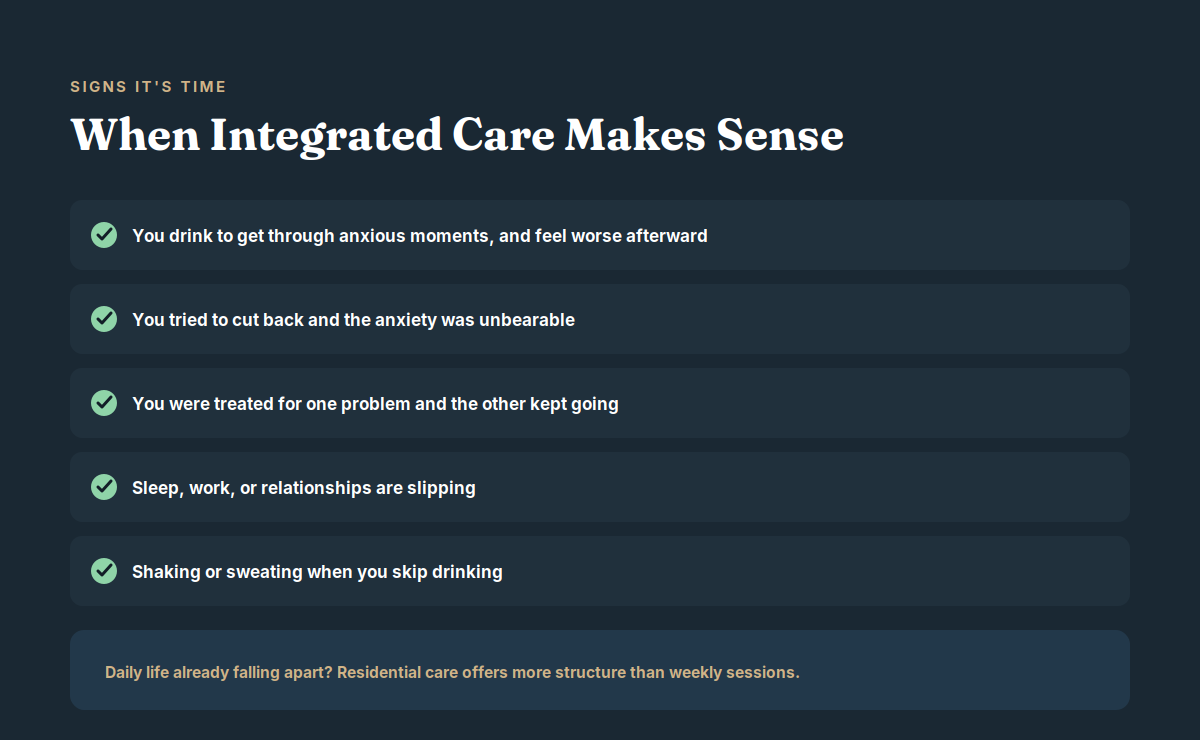
You drink to get through anxious moments, and you feel worse afterward.
You have tried to cut back and found the anxiety unbearable.
You have been treated for one problem before and the other kept going.
Sleep, work, or relationships are slipping.
You have had withdrawal symptoms, such as shaking or sweating, when you skip drinking.
Our article on eight warning signs of generalized anxiety disorder may also help you recognize the anxiety side. If daily life is already falling apart, a residential mental health program offers more structure than weekly sessions can.
Finding support at Fort Worth Wellness
Fort Worth Wellness treats anxiety and alcohol use as connected. Our dual diagnosis program brings therapy, medical care, and addiction treatment together under one plan. If you need to stop drinking safely first, detox comes before the therapy work.
Recovery does not end when a program does. Our aftercare and alumni services keep support in place afterward. If you want to know what the early weeks feel like, read what to expect in your first 30 days of treatment. And if you have lived with anxiety for years, it is not too late for treatment to help.
Visit fortworthwellness.org to start a conversation. You do not have to know which door is the right one. We will help you figure that out.
Frequently Asked Questions
Q: Can a therapist for anxiety also help with alcohol use?
A: Often, yes, if they are trained in co-occurring disorders. A therapist for anxiety can teach coping skills, explore why you drink, and work with your doctor. Heavy or long-term drinking usually needs addiction treatment and medical oversight alongside therapy.
Q: Does drinking make anxiety worse over time?
A: For many people it does. Alcohol may calm you in the moment, but as it wears off, rebound anxiety and poor sleep can follow. That can push you to drink again. NIAAA has material on alcohol's effects on the body and brain.[2]
Q: Should I stop drinking before starting therapy for anxiety?
A: No, you do not have to wait. Starting therapy while you still drink is common. If you drink heavily, though, do not quit suddenly on your own, because withdrawal can be dangerous. Talk to a doctor or a detox program first.
Q: What is dual diagnosis treatment, and how does it work?
A: Dual diagnosis means you have a mental health condition, like anxiety, and a substance use disorder at the same time. Treatment addresses both in one coordinated plan, with therapy, medical care, and relapse prevention working together instead of separately.
Q: How long does it take to see improvement when treating anxiety and alcohol use together?
A: It varies from person to person, so no one can promise a timeline. Many people notice better sleep and fewer cravings early, while deeper anxiety work takes longer. A therapist for anxiety on your care team can tell you what progress looks like for you.
Conclusion
Anxiety and alcohol use are rarely separate problems. Treating one while ignoring the other leaves a gap, and relapse tends to find it. A therapist for anxiety who works with an addiction team can close that gap, with detox, medication guidance, and therapy planned together.
If you or someone you love is stuck in this cycle, Fort Worth Wellness can help you take the first step. Reach out through our website today.
References
Substance Abuse and Mental Health Services Administration. Home | SAMHSA. - https://www.samhsa.gov
National Institute on Alcohol Abuse and Alcoholism. National Institute on Alcohol Abuse and Alcoholism (NIAAA). - https://www.niaaa.nih.gov
American Society of Addiction Medicine. ASAM - American Society of Addiction Medicine. - https://www.asam.org
American Psychiatric Association. Psychiatry.org - DSM. - https://www.psychiatry.org/psychiatrists/practice/dsm
National Institute on Drug Abuse. NIDA.NIH.GOV | National Institute on Drug Abuse (NIDA). - https://nida.nih.gov